
See how buildings change daily life.
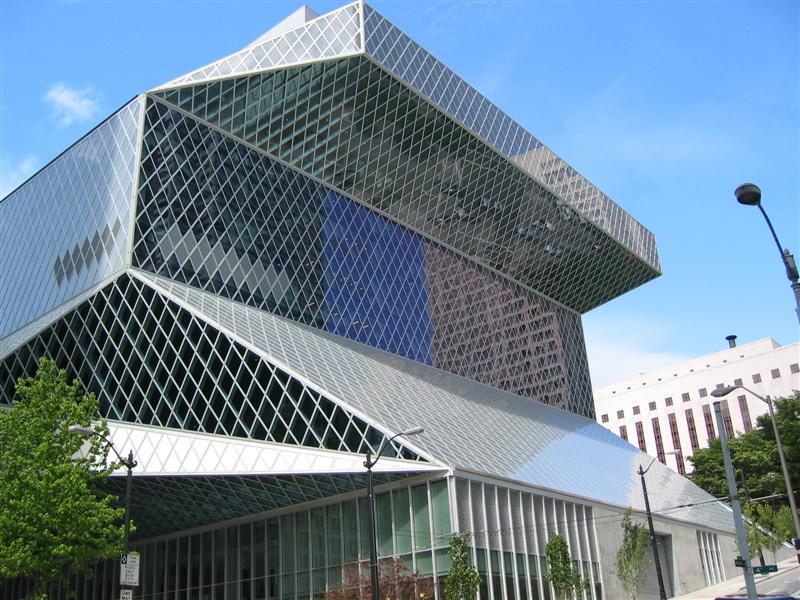

Seattle Central Library
Seattle, Washington · OMA and LMN
The Books Spiral keeps the nonfiction collection on one continuous route. The glass and steel shell wraps around spaces with different uses. A building’s shape can come from how people use it.
Look closer: How would you help a new visitor find a book?
Sources: Library’s own building guide. Checked October 7, 2026.
.jpg)
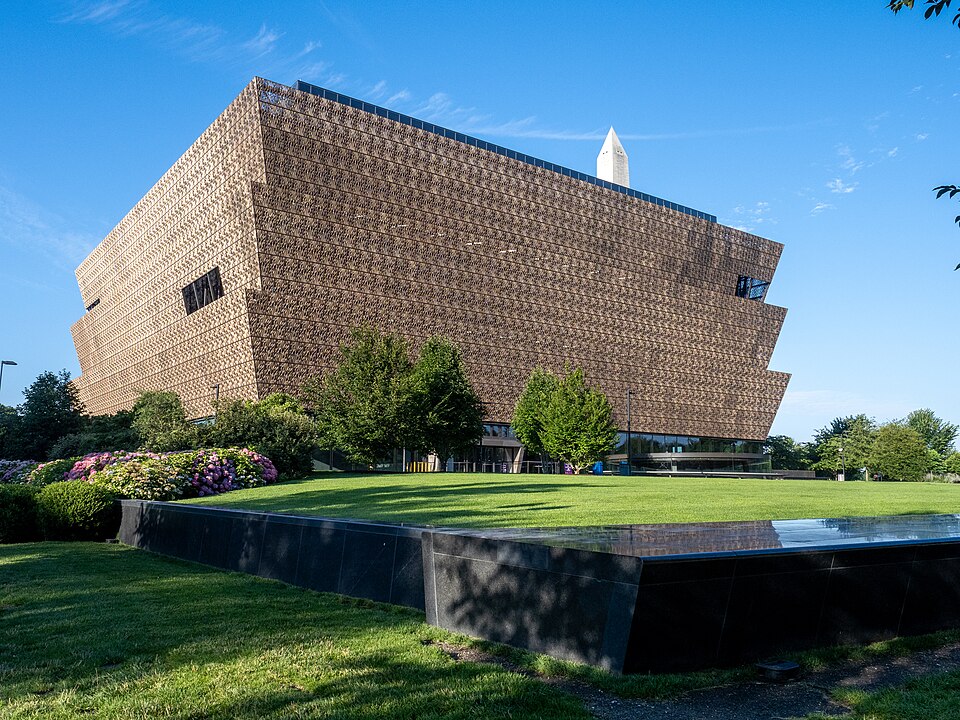
National Museum of African American History and Culture
Washington, D.C. · Freelon Adjaye Bond/SmithGroup
The bronze-colored screen honors metalwork by enslaved and free Black craftspeople. Its openings also shape daylight and heat. One design choice can carry a story and serve a daily need.
Look closer: What local story could a building near you tell?
Sources: Smithsonian: the screen · Smithsonian: the design team. Checked October 7, 2026.
Designing an everyday place: a school.


Bristol County Agricultural High School
Dighton, Massachusetts · Campus renewal by HMFH
A school has to work between classes, at lunch, and during hands-on lessons. HMFH’s renewal joined new and reused buildings with a walking route. The Student Commons gives students a place to eat, study and meet. AIA names Suni Dillard as a project architect on this work.
Try this at your school: sketch the walk from one class to another. Mark a crowded spot and suggest one change.
See the completed spaces in HMFH’s project gallery. The photo here shows the earlier campus; it does not show Dillard’s completed design.
Meet first-generation architects.
These official profiles describe each person as a first-generation college student or graduate. These are two possible paths, not promises about how yours will go.
Suni Dillard
Dillard grew up in rural Washington and was a first-generation college student. Her 2024 AIA profile links her interest in sustainability to work on schools, including Bristol County Agricultural High School. Architecture can connect care for the land with places for learning.
Sources: AIA’s 2024 profile. Checked October 7, 2026.
Jamie Crawley
Crawley is a first-generation college graduate. He earned degrees in environmental design and architecture at Texas A&M. The university’s 2025 profile describes his work as Texas Main Street Architect, helping communities care for older buildings. Design can mean adapting a place that already exists.
Sources: Texas A&M’s 2025 profile. Checked October 7, 2026.
A student’s path: community college first.
Lescilia Panzarella, landscape architecture student, class of 2028 as listed in her 2024 interview. Her story comes from a University of Arizona Q&A published in December 2024.
How did she get to university?
She said university was too costly just after high school. She completed most of her general courses at community college, then transferred.
What was hard?
She described learning the university system as a steep change. Staying focused through setbacks helped. She also built connections through student groups.
What does she enjoy?
Studio lets her turn an idea into something she can see and make. She is interested in public housing and city planning.
Read Arizona’s full eight-question interview · Checked October 7, 2026.
A recent graduate’s view.
In Maryland’s November 2024 first-generation career panel, alumnus Irving Bravo described using Spanish on job sites as an intern architect. His home language helped him work with builders. He also wished he had found a student community earlier; sharing ideas with classmates became useful in his senior year.
In the same report, architecture student Giuseppe Gordillo-Terreros described college and FAFSA paperwork as a major hurdle. Read the linked university report for their full stories.
Maryland’s first-generation student and alumni panel · Published November 15, 2024; checked October 7, 2026.
What architects do, earn and work.
Architects meet clients, develop designs, prepare drawings, work with engineers, and visit job sites. Much of the job involves teamwork, budgets, rules and revisions.
Median means half earned more and half earned less. The lowest-paid 10% earned less than $62,300; the highest-paid 10% earned more than $161,420. These are wage boundaries, not a beginner-to-expert pay scale or the lowest and highest possible pay. The figures are before tax and exclude self-employed workers. Many openings replace people who leave the field or retire. Most architects work full time, and many work extra hours near deadlines.
Sources: BLS Occupational Outlook Handbook: Architects. Checked October 7, 2026.
In college, studio is a project class. You draw, make models, test ideas and get feedback. Work continues outside class, and revisions take time. This can be hard to fit around a job or care duties. Use the linked course list and student-work page below to explore what a college week could involve. Long hours without sleep should not be treated as a badge of success.
Sources: UVA: teaching and learning culture. Checked October 7, 2026.
What is an architecture studio class like?
Do this: open Virginia Tech’s course list. Find ARCH 1015–1016, the first-year design lab. Credits are not the same as hours in class. In a target college’s public class schedule, search its first-year studio code. Write down meeting days and times, other classes, travel, work and care duties.
For a project example, open Maryland’s student-work page. Pick an undergraduate project and look at the drawings, models and revisions it involved. Check its year; advanced work is not a beginner’s entry standard. If no first-year example or weekly schedule is posted, copy an email asking for a first-year schedule.
How do you become a licensed architect?
A license lets you practice as an architect under state rules. The usual path includes an accepted degree, supervised work and exams. A NAAB-accredited B.Arch usually takes five years. A four-year BA or BS in architecture is usually a different degree; many students then need an M.Arch. Check the exact degree, not just the college name.
NCARB’s experience program requires 3,740 approved hours. You can start after high school graduation, and some eligible work can overlap with college. The licensing exam has six parts. State rules control the full path, so a degree alone does not make you licensed.
Sources: NAAB: prospective students · NCARB: experience · NCARB: exams. Checked October 7, 2026.
Related careers: training and pay.
| Work | Typical entry route | Median pay |
|---|---|---|
| Drafter Make technical drawings from designs. | Often an associate’s degree, about two years; some certificate routes. | $68,090 |
| Landscape architect Design outdoor places. | Usually a bachelor’s degree in landscape architecture; experience and an exam for a license. | $79,870 |
| Urban or regional planner Plan land use and community change. | Typically a master’s after a bachelor’s. Some roles accept a planning bachelor’s. | $89,320 |
| Interior designer Plan safe, useful indoor spaces. | Typically a bachelor’s degree. State practice and title rules differ. | $67,190 |
| Construction manager Manage building work, budgets and schedules. | Typically a bachelor’s plus learning on the job; experience also matters. | $114,990 |
| Civil / structural engineer Design infrastructure and load-bearing structures. | Typically a civil engineering bachelor’s or related degree. Public-facing professional services need state licensure. | $100,840 |
Each job name links to its BLS profile. Pay depends on place, employer and experience. The civil-engineer figure covers that occupation as a whole; it is not a separate structural-engineer figure.
Drafting can offer a shorter, often less costly route into building design work. The $68,090 median covers all drafters; architectural and civil drafters had a $66,150 median. An associate’s degree is not an architect’s license. Compare a local program’s full cost and job placement record, and ask whether its credits would count if you later chose another degree.
Plan a community college transfer route